STRONG, SUPPLE, UNSTOPPABLE
Backed by science. Doable in your living room. No mat required.
Somewhere after 40, the body starts sending little memos: a stiffer lower back on cold mornings, hips that complain on the stairs, shoulders that no longer reach the top shelf without a wince. When everything is upside down, mind it you are not alone. This isn’t decline for its own sake — it’s biology.
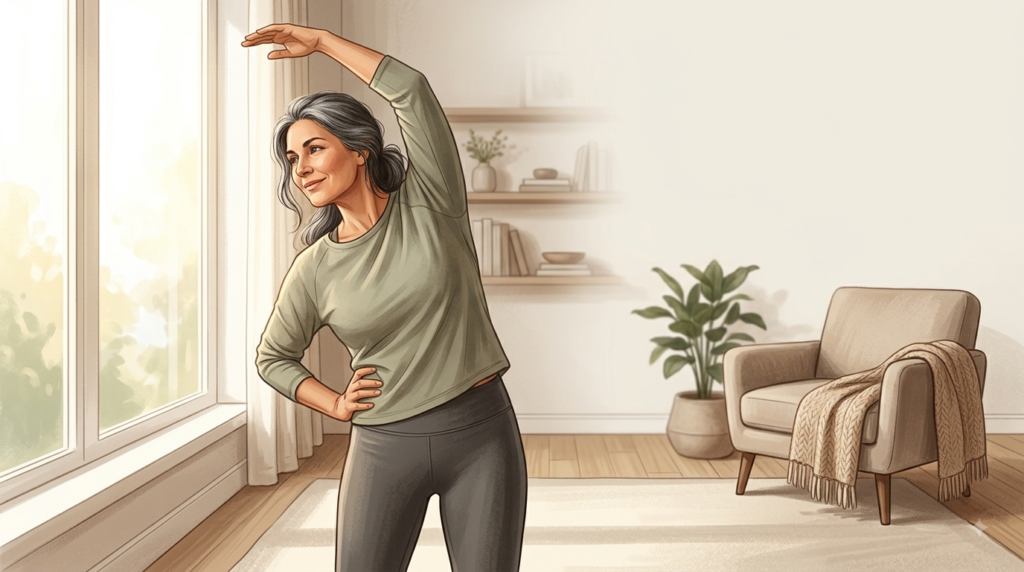
And the good news is that a handful of well-chosen light and gentle stretches, done consistently, can quiet most of those memos for good and help you get that quality back in your life again.
Why Your Body Changes the Rules After 40
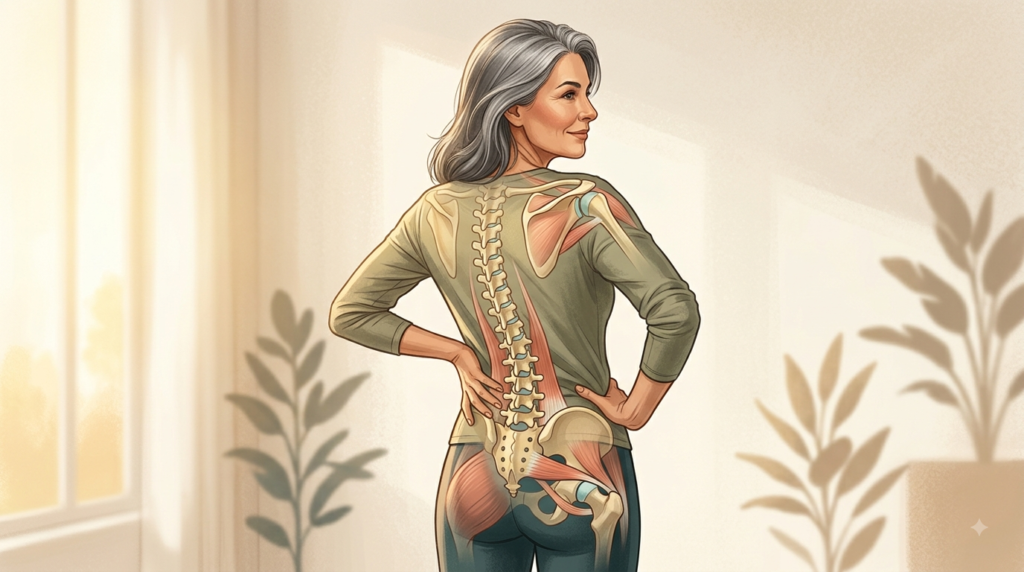
The shift isn’t only in your head. Estrogen begins its slow decline through the 40s, and estrogen does more than to regulate cycles — it helps keep collagen supple and joints lubricated. As levels drop, collagen production slows down,connective tissue loses some elasticity, and joints can feel drier and stiffer than they used to. Muscle mass also declines gradually with age, a process called sarcopenia, which changes how tissue responds to movement and how quickly it tightens up after sitting still.
None of this means your best mobility is behind you. Research consistently shows that regular stretching improves range of motion at any age, and a small but well-designed study out of Tokyo found that women who stretched for just ten minutes before bed reported meaningfully better sleep and mood within three weeks. The takeaway: consistency matters more than intensity.
10 minutes of nightly stretching was linked to improved mood and sleep in a controlled study of women 40–61.
Six Stretches Worth Making Time For
Each of these targets an area that tends to tighten first: hips, spine, shoulders, and hamstrings. Hold every stretch gently — to the point of mild tension, never pain — and breathe slowly throughout.
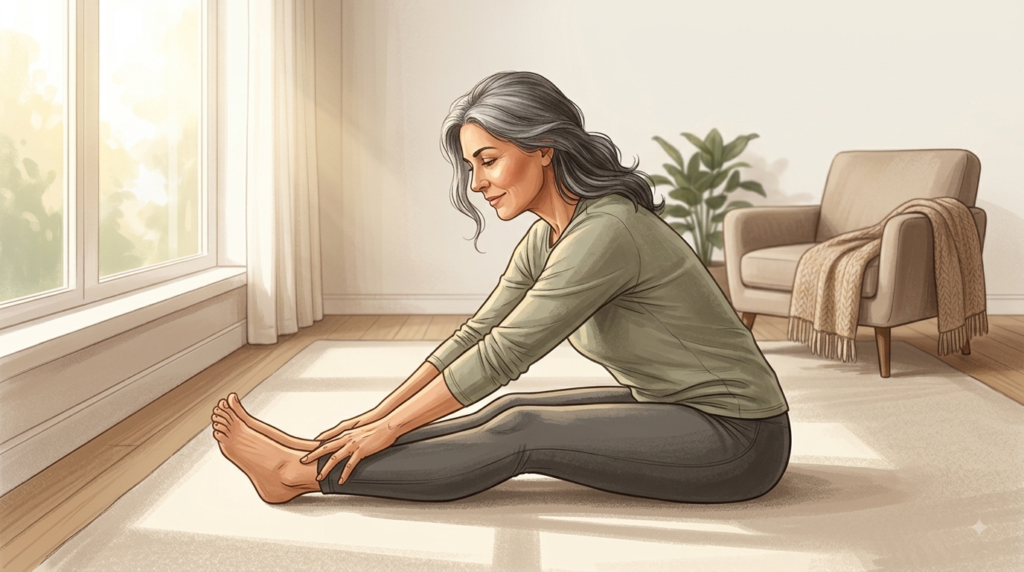
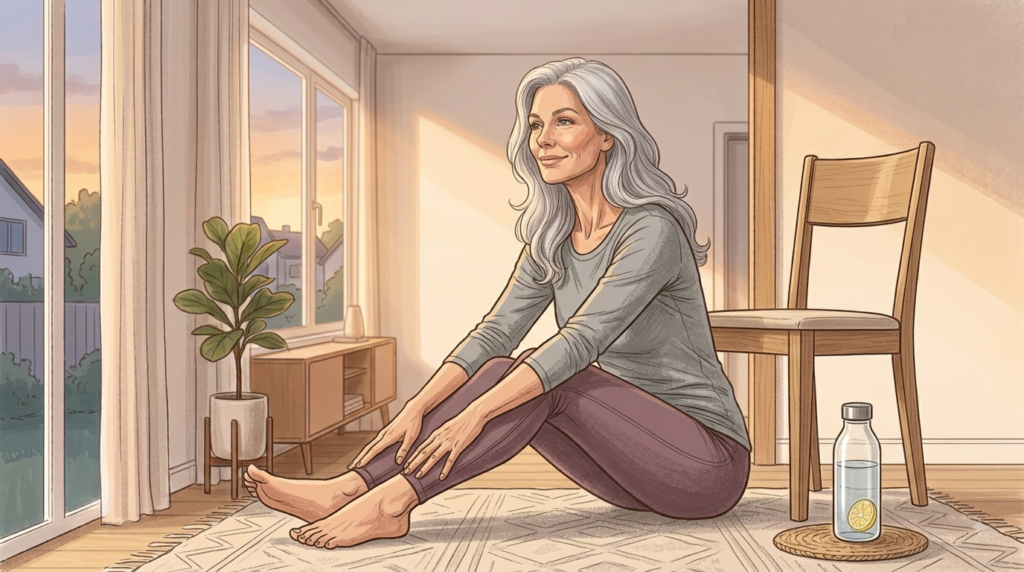
- Seated Forward Fold — for hamstrings and lower back
Sit on the floor with legs extended. Hinge forward from the hips, reaching toward your shins or feet, keeping
your spine long rather than rounded.
— Hold 30 seconds, breathing into the stretch
— Bend knees slightly if the lower back rounds
— Loosens tissue that shortens from daily sitting
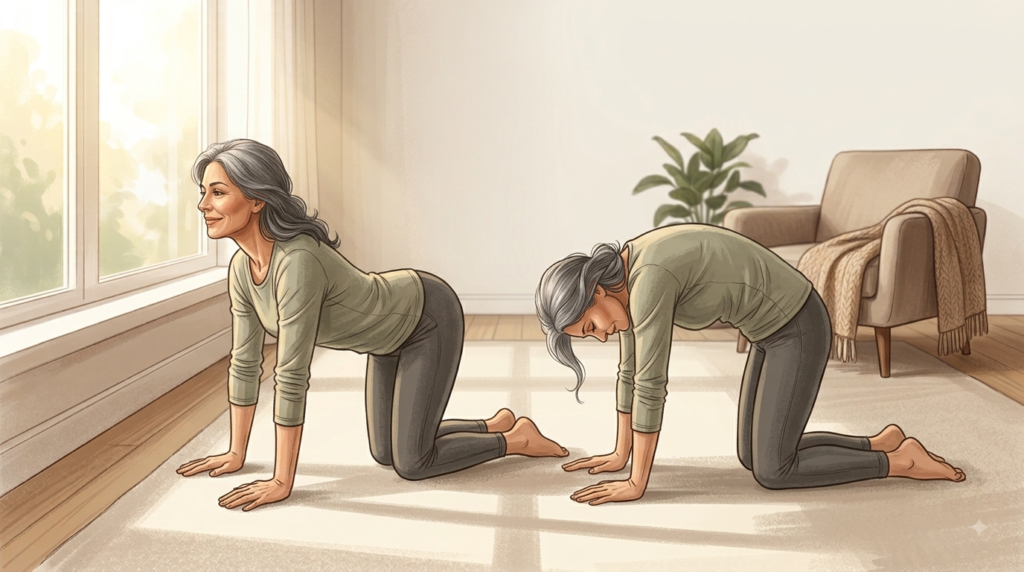
- Cat-Cow — for spinal mobility
On hands and knees, alternate between arching the spine toward the ceiling and dipping it toward the floor,
moving with your breath.
— Do 8–10 slow cycles
— Keep the movement flowing, not jerky
— Counters the forward-hunch posture of desk work and phone scrolling
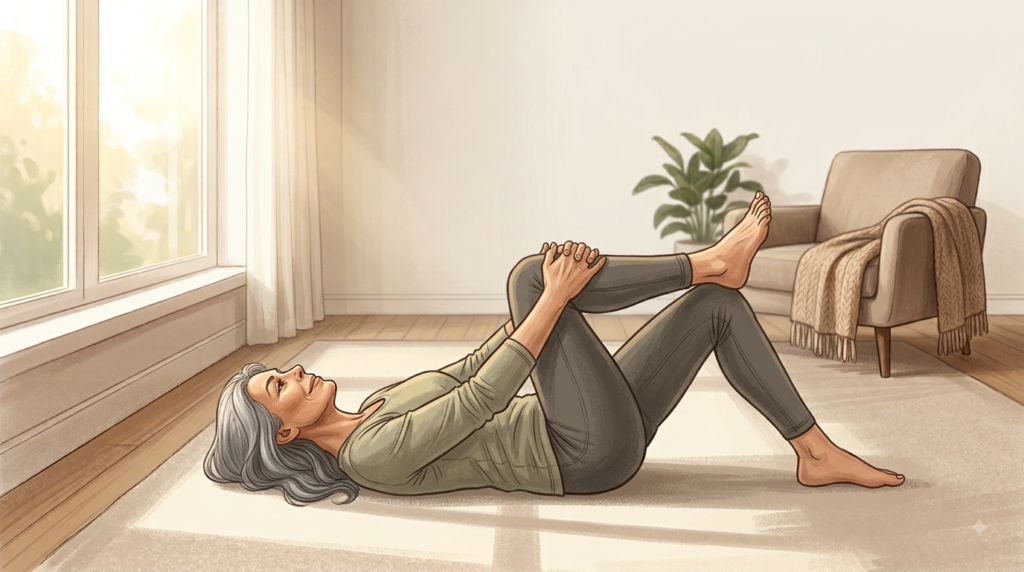
- Figure-Four Hip Stretch — for hip flexors and glutes
Lying on your back, cross one ankle over the opposite knee and gently pull the uncrossed thigh toward your
chest.
— Hold 30 seconds each side
— Keep the crossed foot flexed to protect the knee
— Eases hip tightness that contributes to lower-back strain
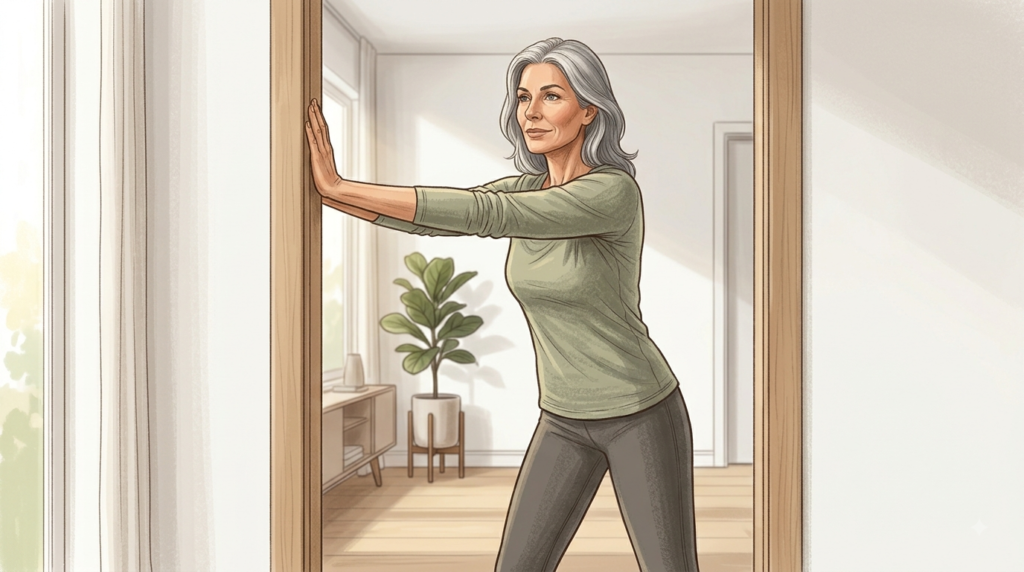
- Doorway Chest Stretch — for shoulders and posture
Stand in a doorway, forearms on the frame at shoulder height, and lean gently forward until you feel the stretch
across your chest.
— Hold 20–30 seconds
— Keep shoulders relaxed away from the ears
— Helps open the chest against rounded, screen-forward posture
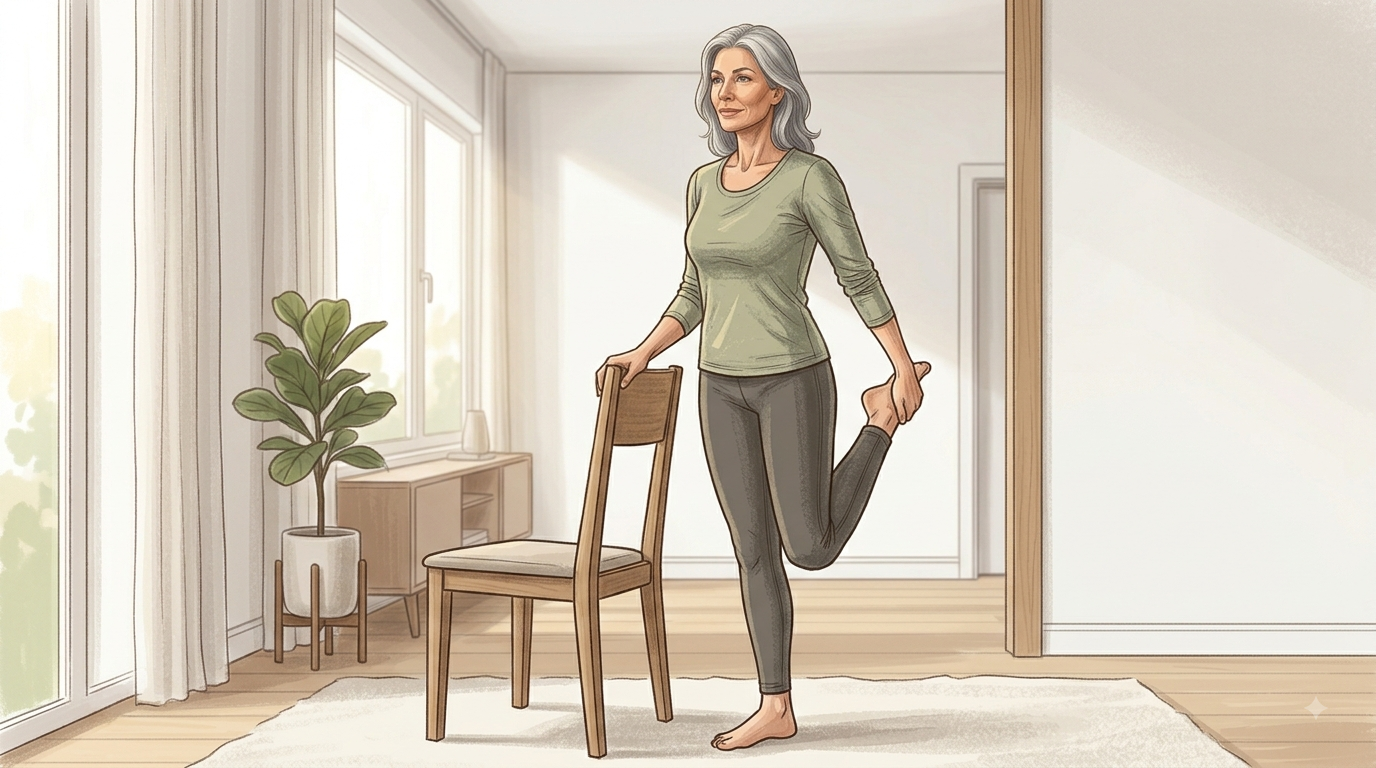
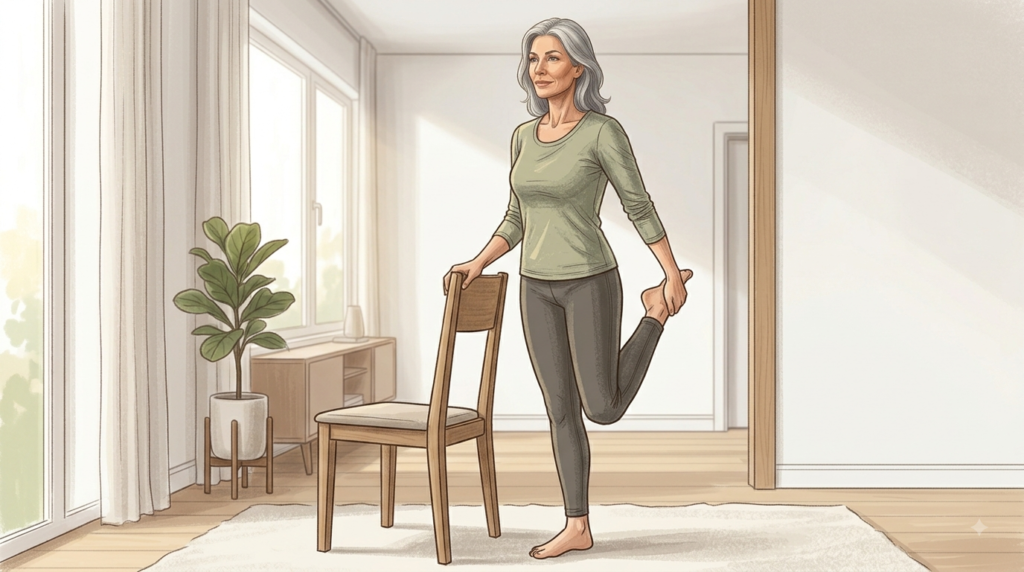
- Standing Quad Stretch — for balance and knee comfort
Holding a wall or chair for balance, bend one knee and bring your heel toward your glutes, keeping the knees
close together.
— Hold 20–30 seconds each side
— Squeeze the standing glute to protect the lower back
— Supports knee comfort and everyday balance
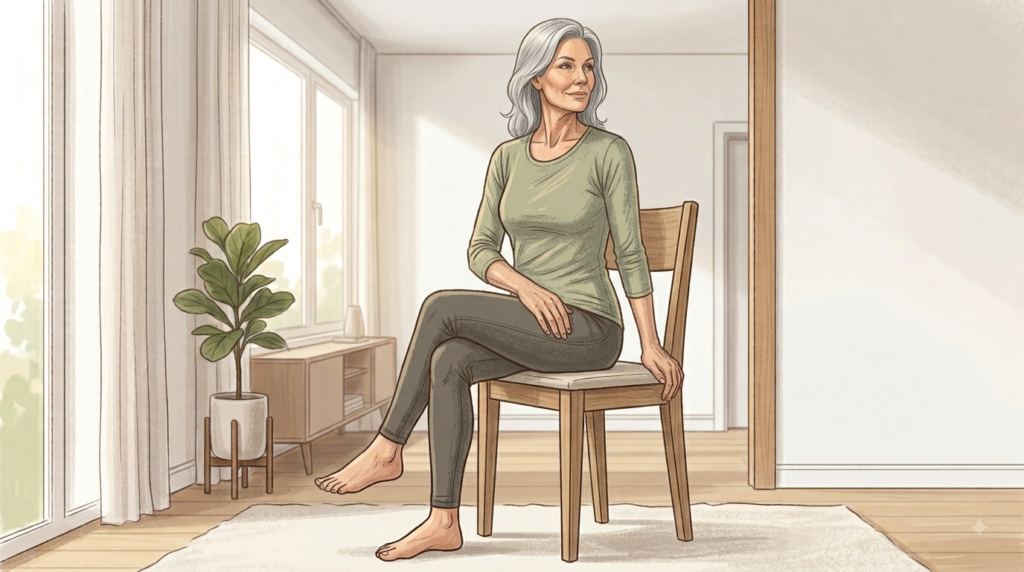
- Seated Spinal Twist — for mid-back rotation
Sitting tall, place one hand behind you and gently rotate your torso, looking over your shoulder as far as feels
comfortable.
— Hold 20 seconds each direction
— Twist from the ribs, not by yanking the neck
— Maintains the rotation you rely on for driving and reaching
Making it Stick
Flexibilty gains fade quickly if stretching is occasional.Anchoring to the routine you already do-right after brushing your teeth or during the first ad break of your favourite evening show-turns into a habit rather than a chore. Ten to fifteen minutes, five days a week, is enough to see a difference within a month.
A few practical notes: strech when muscles are probably warm if possible, such as after a short walk; never bounce into a stretch, which can trigger a positive tightening reflex; and treat any sharp or pinching pain as a signal to stop, since discomfort should stay mild and dull.
The Bottom Line
As new guidelines show that mild but consistent streches melts down muscle tightness, relaxes the brain and improves the flexibilty overall. Stiffness after 40 is common, but it should not be you necessarily as it is not fixed fror everyone.
The tissue changes driving it — slower collagen renewal, gradual muscle loss, fluctuating hormones — respond well to regular, gentle stretching. Six stretches, ten minutes, most days of the week: a small, sustainable habit with an outsized payoff in how your body moves, sleeps, and feels.
As always, check with your doctor before starting a new routine if you have an existing injury or health condition.