Why short, gentle movement breaks throughout the day may do more for balance and fall prevention than a single workout ever could.
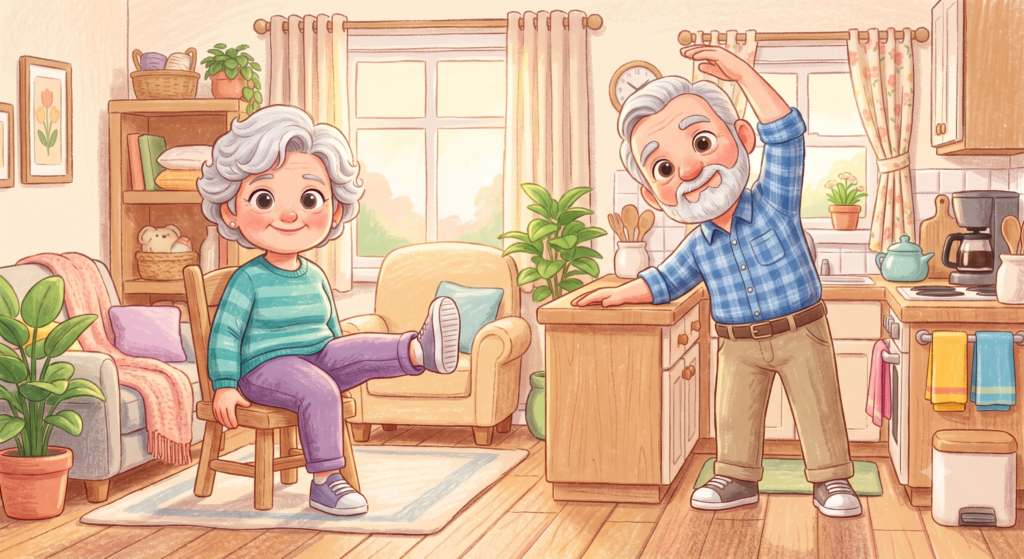
Getting older doesn’t have to mean getting stiffer, slower, or more fearful of the next fall. Yet for many people over 65, that’s exactly what happens — not because decline is inevitable, but because movement quietly disappears from the day. A chair is comfortable. Stairs feel risky. And the less the body moves, the harder moving becomes. One in four older adults falls each year, and much of that risk traces back to joints and muscles that simply aren’t asked to work through their full range anymore. The fix isn’t a demanding new exercise class. It’s something far more forgiving: mobility snacking.
What Mobility Snacking Means for Older Adults
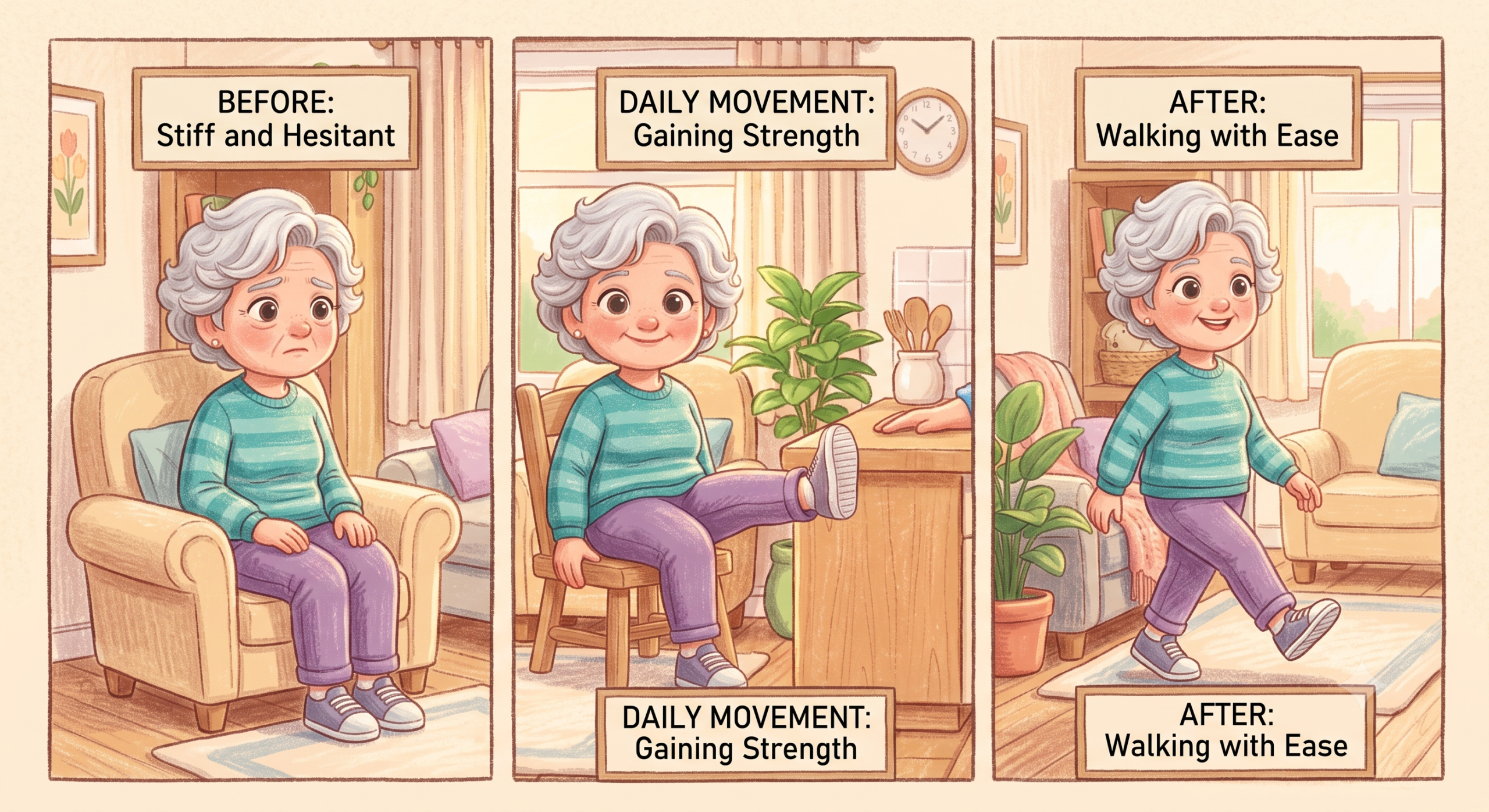
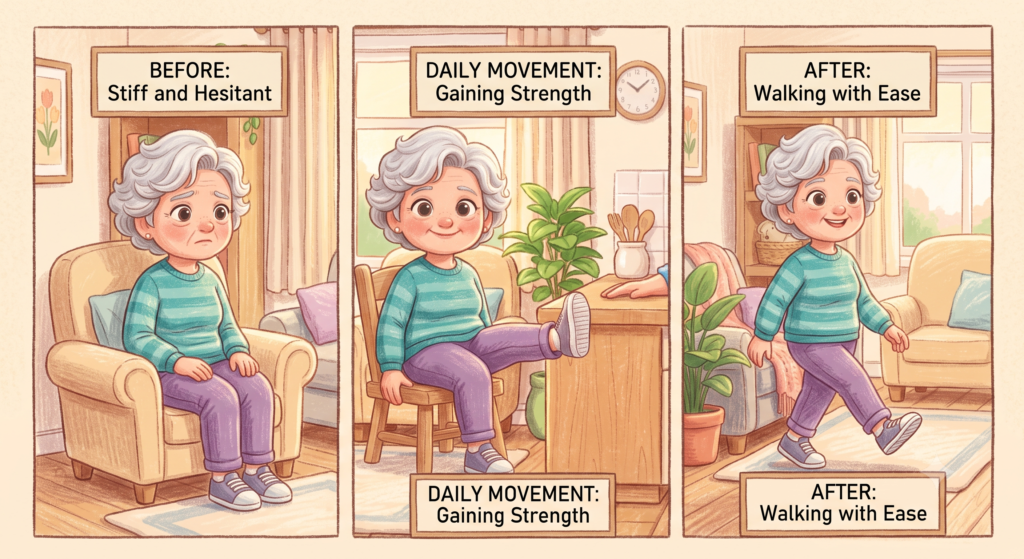
Mobility snacking is the practice of doing very short bursts of gentle joint movement — often sixty seconds or less — spread across the day rather than saved for one long session. For seniors, this approach solves two problems at once. It avoids the fatigue and joint strain that can come from a single, longer workout, and it keeps hips, ankles, shoulders, and the spine moving consistently enough that stiffness never gets the chance to set in.
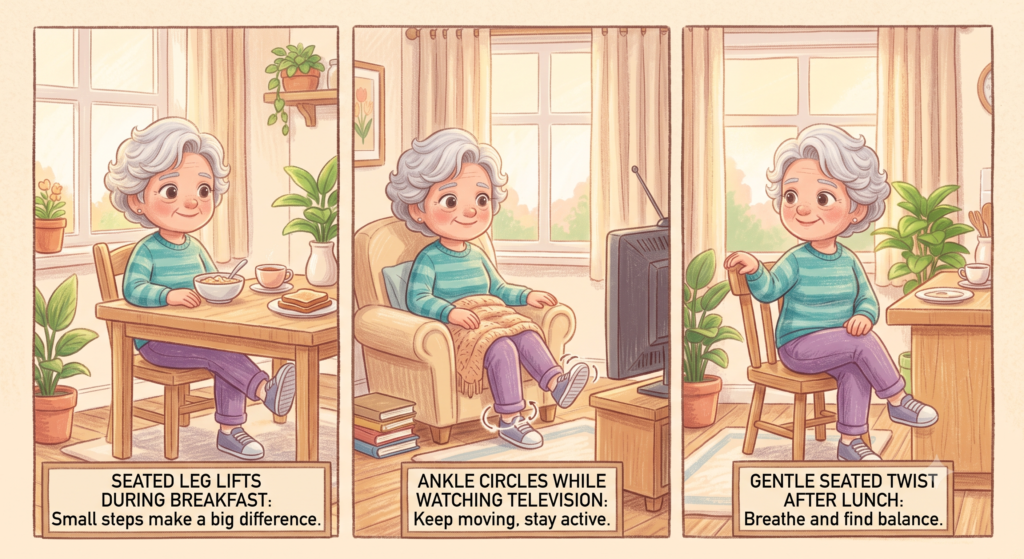
A few seated leg lifts before breakfast, some ankle circles while watching the morning news, and a gentle seated twist after lunch add up to real, cumulative benefit without ever feeling like exercise.
Why This Matters More Than Flexibility Alone
It’s tempting to think of aging bodies as simply needing to “stretch more,” but flexibility is only part of the picture. What actually keeps someone steady on their feet is joint mobility working together with balance and strength — the ability to shift weight, catch a stumble, and recover before it becomes a fall. Research on community-dwelling older adults consistently shows that movement-based programs combining strength, balance, and mobility reduce both the number of falls and the severity of fall-related injuries. Mobility snacking is a low-barrier way to build that foundation, because it trains joints to move actively and with control, not just passively pulled into a stretch.
A Simple, Chair-Friendly Routine
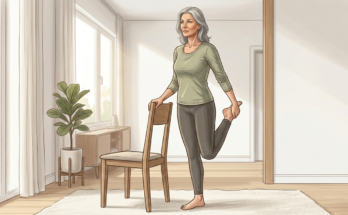
None of this requires a gym, special equipment, or getting down onto the floor. A sturdy chair, a wall, or a kitchen counter for light support is enough. Try weaving a few of these into natural pauses in the day:
Seated marching: Lift each knee slowly while seated, 10 times per leg, to wake up hip mobility and circulation.
Ankle circles: Rotate each foot in both directions for 15–20 seconds to support balance and stable walking.
Seated cat-cow: While sitting, alternate arching and rounding the spine to ease stiffness through the mid- and lower back.
Standing weight shifts: Holding a counter for support, shift weight slowly from one foot to the other to train the balance reflexes that prevent falls.
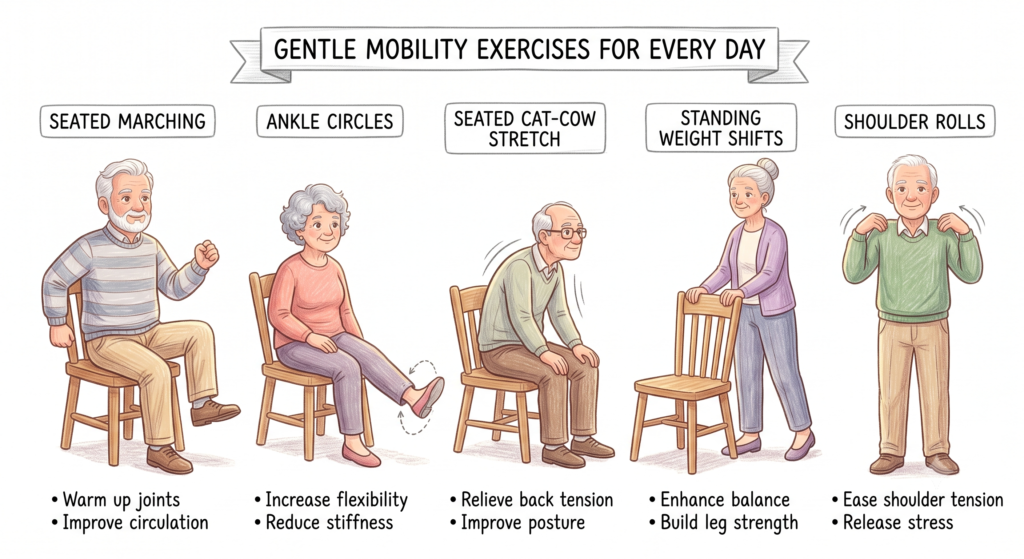
Shoulder rolls and gentle reaches: Roll the shoulders and reach overhead a few times to keep the upper body loose for everyday tasks like reaching a shelf.
Doing two or three of these for under a minute each, spaced across morning, midday, and evening, is enough to notice a difference within a couple of weeks — no soreness, no special clothing, no appointment required.
Safety Comes First
The goal is always smooth, pain-free movement — never pushing into discomfort. A few guidelines make mobility snacking both safer and more effective:
Keep support nearby. A chair, wall, or counter should be within reach for any standing movement.
Move slowly and breathe normally. Rushed or held-breath movement raises fall risk rather than lowering it.
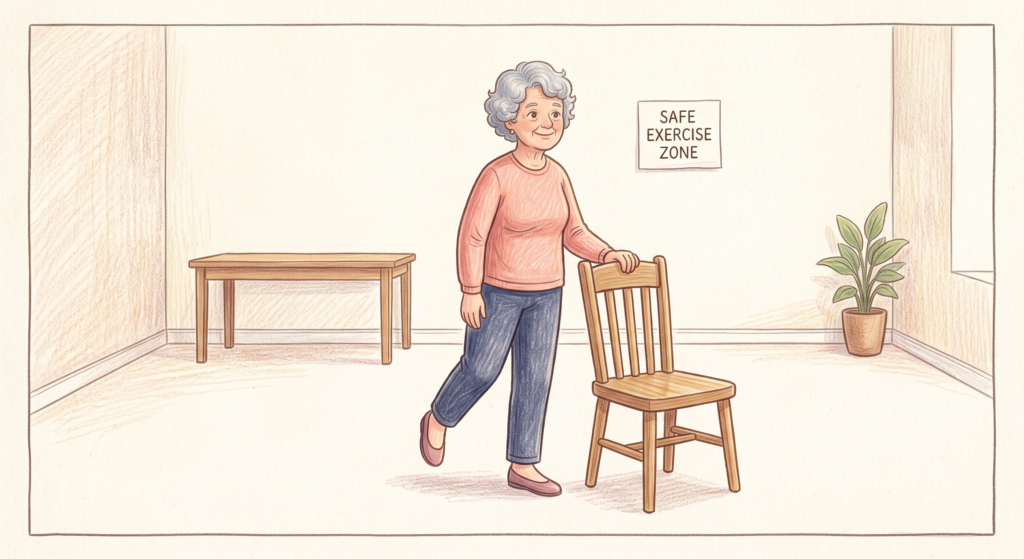
Stop at the first sign of pain, dizziness, or unsteadiness, and check with a doctor or physical therapist before starting anything new, especially after a recent fall, surgery, or diagnosis like arthritis or osteoporosis.
Consistency beats intensity. A minute of movement five times a day is more valuable — and far safer — than one long, tiring session.
The Bigger Payoff: Independence
The real reason mobility snacking matters for older adults isn’t flexibility for its own sake. It’s what that flexibility protects: the ability to get up from a chair without help, to reach the top shelf, to walk to the mailbox with confidence, to catch a stumble instead of falling. Physical therapists who specialize in fall prevention often point out that these small, frequent movements do more to preserve day-to-day independence than occasional, intense workouts — because the body never gets the chance to fully seize up in between.
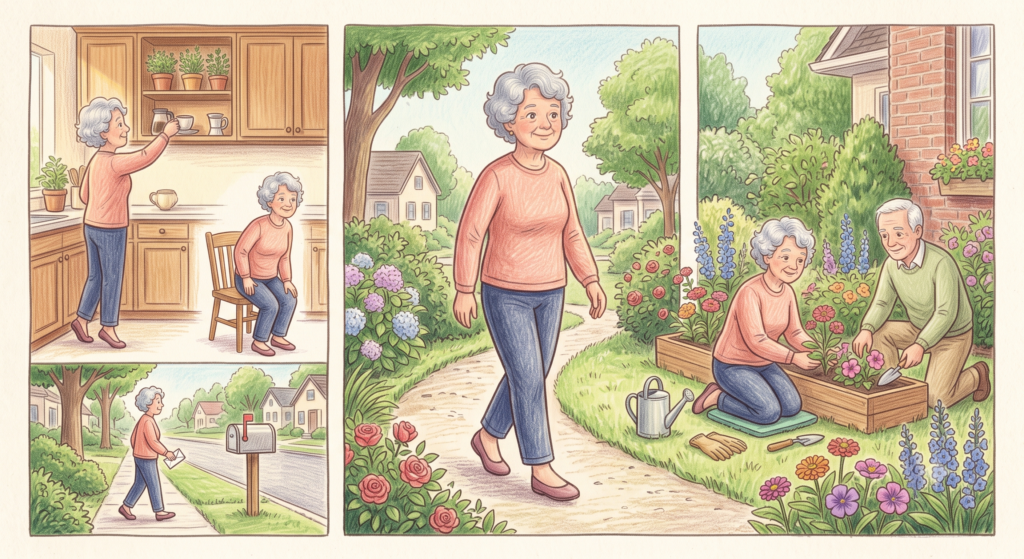
Aging well isn’t about training harder. It’s about moving often enough that the body never forgets how. A minute here, a minute there, repeated through the day, is a realistic habit almost anyone can keep — and one that pays off every time it prevents a stumble from becoming a fall.
This article is for educational purposes only. Please consult your health professional before starting any new mobility or excercise related programmes.