
Causes, symptoms, Proven home remedies, treatments, and science backed ways to stop tension headeaches before they start
TABLE OF CONTENTS
1. What Is a Tension Headache?
2. How Common Are They?
3. Symptoms to Know
4. Tension Headache vs. Migraine
5. Causes & Triggers
6. Home Remedies That Work
7. Medical Treatments
8. Prevention Tips
9. When to See a Doctor
10. Frequently Asked Question
What is Tension Headache?
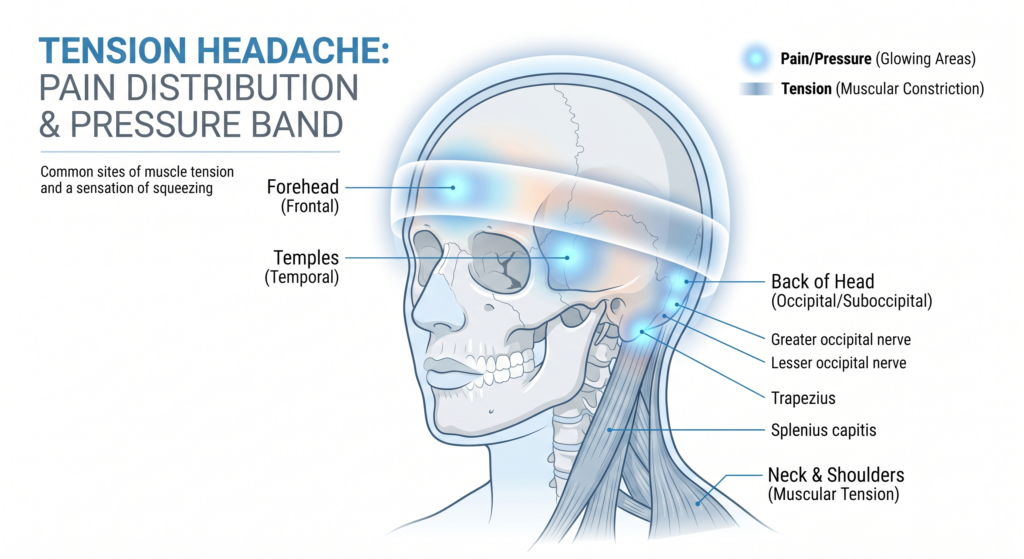
A tension headache is the most common type of headache that
people experience. It produces a dull, aching pain — often
described as a tight band or pressure squeezing around the
forehead, temples, or back of the head. Unlike migraines,
tension headaches generally don’t cause nausea, vomiting, or
visual disturbance.

They fall into two categories:
Episodic tension headaches — occur fewer than 15 days per
month. Most people experience these occasionally, often
triggered by stress or poor posture.
Chronic tension headaches — more occur 15 or more days per month
for at least 3 months. These can significantly affect quality of life
and often require medical management.
How Common Are They?
Tension headaches are surprisingly widespread. If you’ve had
one, you’re in very good company.
75% of adults will experience tension Headache at some point.
About 3% of the global population suffers from the chronic tension headaches.
2X more common in women than men.
Symptoms to know
Tension headache pain is distinctive. Here’s what to watch for:
Dull, aching pressure — Not throbbing, but a steady squeeze or
tightness around the head.
Band-like sensation — Feels like a tight headband wrapping
around the forehead, sides, and back of the skull.

Scalp, neck, and shoulder tenderness — Muscles around your
head and neck may feel sore to the touch.
Duration of 30 minutes to 7 days — Episodic episodes typical last a few hours; chronic ones may persist for days.
Mild light or sound sensitivity — Unlike migraines, both
sensitivities are usually mild and not debilitating.
No worsening with activity — Routine physical activity doesn’t
intensify the pain (a key difference from Migraines.
Quick Tip
Tension headaches are usually bilateral (both sides of the
head). If your headache is one-sided and throbbing, it
may be a migraine — scroll down for the comparison.
Tension Headache vs. Migraine
These two are most commonly confused headache types.Here’s how they differ at glance:
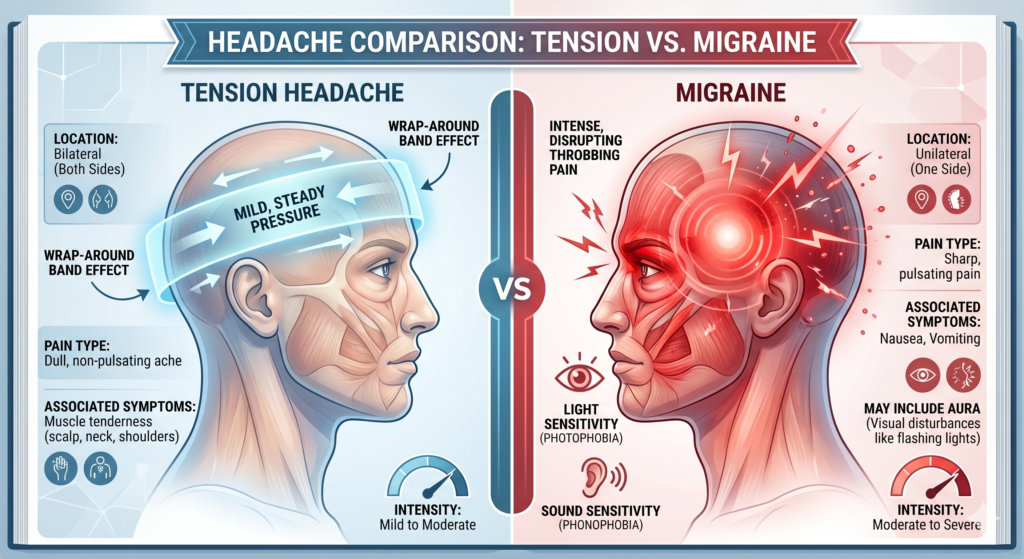
| Tension Headache | Migraine |
| usually both sides | one sided |
| Dull; Pressing pain | Throbbing: pulsating pain |
| Mild to moderate severity | Moderate to severe |
| No nause & vomiting | Nausea & vomiting |
| Mild or no light sensitivity | significant light and sound sensitivity |
| Not worsned by activity | Worsened by movement |
| No Aura | Possibly visual aura |
Causes & Common Triggers
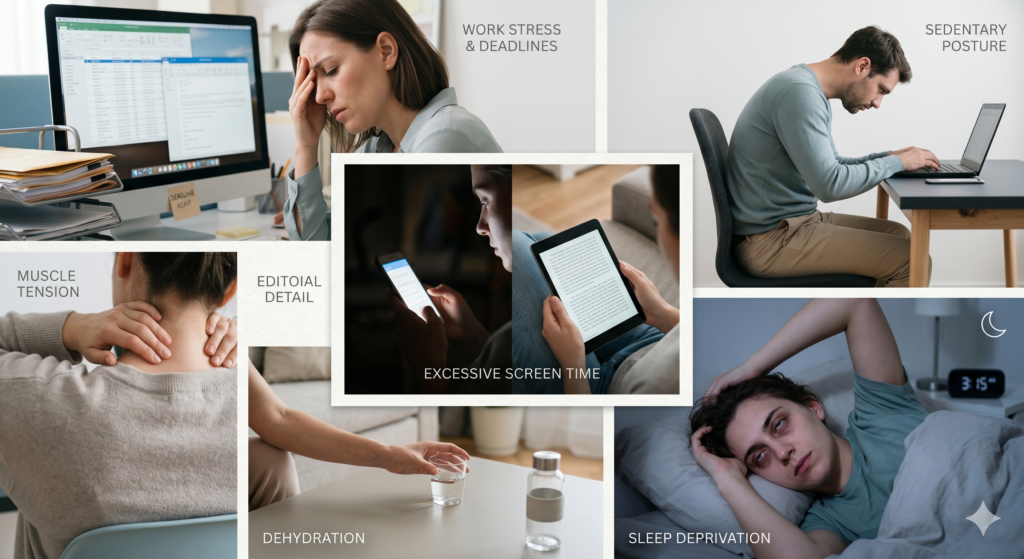
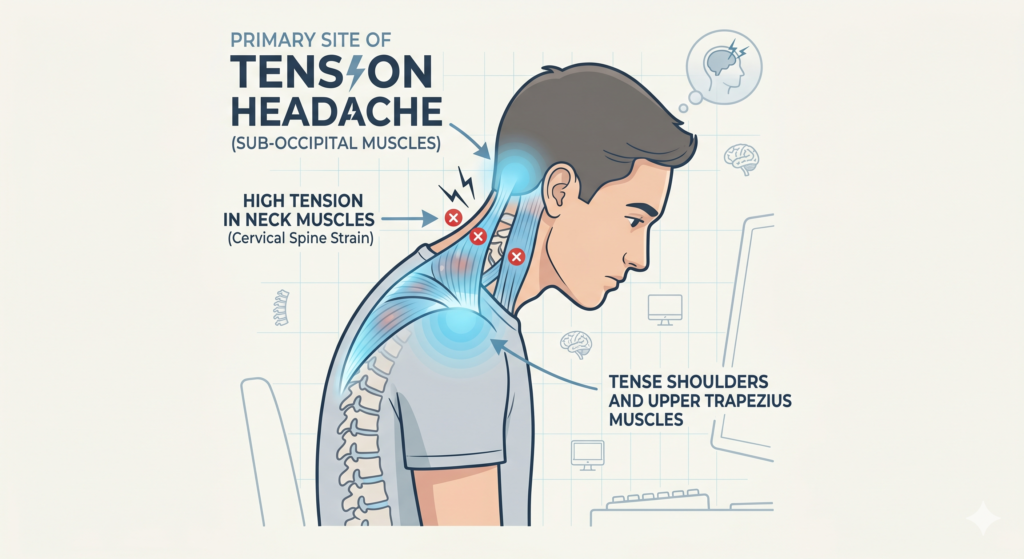
The exact cause of tension headaches isn’t fully understood, but
researchers believe they involve muscle contractions in the
head, neck, and scalp — often triggered by emotional or
physical stress. Common triggers include:
Emotional stress & anxiety — The single biggest trigger. Stress
causes muscles around the head and neck to tighten
involuntarily.

Poor posture & screen time — Slouching or craning your neck
toward a screen strains muscles, which can trigger a headache.
Sleep deprivation — Too little — or too much — sleep disrupts the
body’s normal pain threshold.
Dehydration — Even mild dehydration can cause or worsen head
pain.
Caffeine changes — Skipping your morning coffee or
overconsuming caffeine can both trigger a headache.
Eye strain — Extended screen use without breaks forces your eye
and forehead muscles to work harder.
Skipping meals — Low blood sugar can trigger tension
headaches in many people.
Weather changes — Shifts in barometric pressure or temperature
may trigger episodes in sensitive individuals.
Home Remedies That Actually Work
Before reaching for pills, try these evidence-supported home remedies.Many people find significant relief without medications.
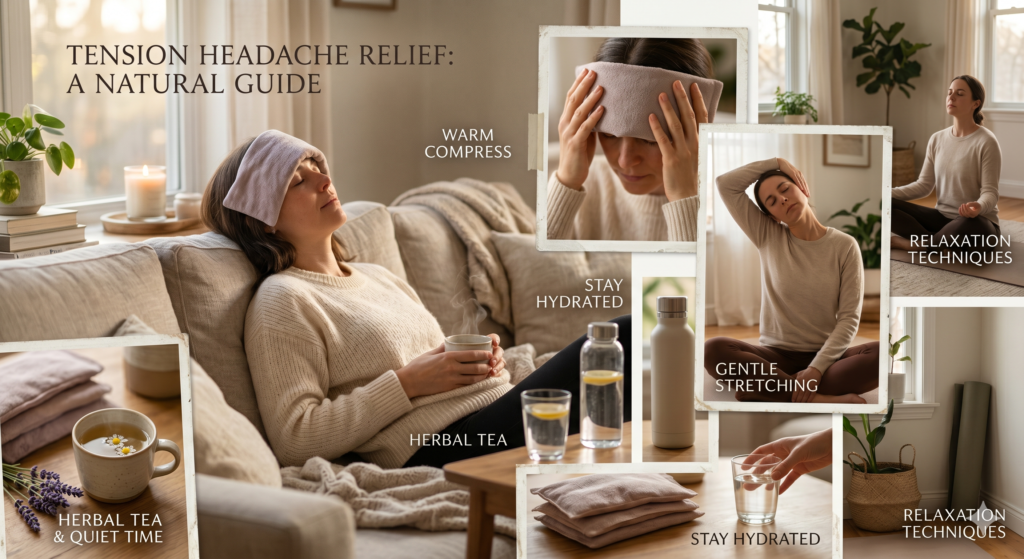
Hot or Cold Compress
Apply a warm compress to your
neck and shoulders to relax tense
muscles, or use a cold pack on
your forehead to numb pain signals.
Hydrate immediately
Drink 2–3 glasses of water right
away. Dehydration is a sneaky
trigger — this alone can resolve a
mild tension headache within thirty minutes.
Neck and Shoulder strectches
Gently tilt your head side to side and roll your shoulders.Releasing muscle tightness in your neck usually gives very fast relief.
Deep Breathing and Meditation
Slow and diaphragmatic breathing affects your parasympathetic nervous system, easing stress-diven muscle tension.
Warm Bath or shower
Heat relaxes tense muscles and improves blood circulation.A 15-
minute warm shower can melt
away the neck tension fueling your headache.
Rest in dark, quiet room
Reducing sensory input lets your
nervous system calm down. Even
a 20-minute rest with eyes closed
can significantly reduce pain intensity.
Scalp and Temple Massage
Use your fingertips to gently massage your temples, scalp and the base of your skull in circular motions for 5-10 minutes.
Peppermint oil
Applying diluted peppermint
essential oil to the forehead and
temples has been shown in
studies to be as effective as
acetaminophen for mild tension
headaches.
Medical treatments

Over-the-Counter (OTC) Pain Relievers
For episodic tension headaches, OTC medications are usually effective.
Ibuprofen-An anti-inhammatory that works
well for tension headache pain.
Acetaminophen-Effective and gentlle on the stomach.A good first choice.
Aspirin — An older but proven option for mild to moderate head
pain.
Combination formulas — Products containing caffeine + pain
reliever can enhance effectiveness for some people.
Medication overuse warning
Using pain relievers more than 10-15 minutes a month can lead to rebound headaches (medication overuse headache), which are harder to treat.If you are relying on OTC meds frequently, speak with a Dr.
Prescription Treatments for Chronic Tension Headaches
If headaches are frequent or severely impacting your life, a
doctor may recommend:
Tricyclic antidepressants (like amitriptyline) — commonly used as a preventive treatment,even for those without permission.
Muscle relaxants — can help in cases where signifcant neck and
shoulder tension is involved.
Cognitive Behavioral Therapy (CBT) — extremely effective for
stress-related chronic headaches.
Biofeedback therapy — teaches you to control muscle tension
and stress responses that trigger headaches.
Physical therapy — addresses posture and muscular imbalances
that contribute to chronic headaches.
Prevention Tips: Stop Headaches Before They Start
The most effective approach to tension headaches is preventing
them. These lifestyle changes are backed by research and
widely recommended by neurologists.
Maintain a consistent sleep schedule
Go to bed and wake up at the same time every day — even on
weekends. Irregular sleep is a major headache trigger.
Stay well hydrated all day
Aim for 8 glasses (2 liters) of water daily. Keep a water bottle
visible at your desk as a reminder.

Practice the 20-20-20 rule
Every 20 minutes of screen time, look at something 20 feet away
for 20 seconds. This reduces eye strain dramatically.
Correct your posture
Keep your monior at eye level,shoulders relaxed, and back
supported. Poor posture is a leading cause of tension headaches in the desk workers.
Manage stress actively
Yoga, meditation, journaling, or even a 20-minute daily walk can
signiZcantly reduce tension headache frequency.
Don’t skip meals
Eat regular, balanced meals to keep blood sugar stable. Even a
small snack can prevent a hunger-triggered headache.
Limit caffeine intake
Keep caffeine moderate and consistent. Abrupt changes in your
caffeine routine — more or less — can spark a headache.
Excercise Regularly
Aerobic exercise at least 3 times a week reduces the frequency
and severity of tension headaches over time, possibly by
releasing endorphins.
When to see a Dr
Most tension headaches are not harmful and easily manageble at home.However, some heache patterns are warning signs that need medical attention.
Seek Medical Help If Your Headache…..
Comes on suddenly and is the worst headache of your life(thunderclap headache).
Is accompanied by fever, neck stiffness,confusion or vision changes.
Follows a head injury or trauma.
Is progressively worsening over days or weeks.
Ocuurs more than 15 days a month.
Does not respond to any OTC medication.
Is new and you are over 50.
These symptims indicate serious problems like subarachnoid haemorrhage , meningitis, stroke or intracranial bleed.
Frequently Asked Questions
Can dehydration alone cause a tension headache?
Yes. Even mild dehydration can trigger a tension headache. When you
don’t drink enough water, your brain can temporarily shrink slightly due
to huid loss, causing pain. Drinking 2–3 glasses of water at the onset often
helps resolve it within 30–60 minutes.
How long does tension headache last?
Episodic tension headaches usually last anywhere from 30 minutes to a
few hours, though they can persist up to 7 days in some cases. Chronic
tension headaches, by definition, occur 15+ days per month and can feel
almost constant.
Can stress at work cause daily tension headache?
Absolutely. Workplace stress is one of the most common causes of both
episodic and chronic tension headaches. Deadlines, conflict, and mental
overload keep muscles tense for long periods. Stress management
techniques like mindfulness and regular breaks can really help.
Is it safe to take ibuprofen or Tylenol every day for tension headaches?
No, taking OTC pain relievers for 10 to 15 days can lead to medication over use headache, where stopping medications causes a new harder to treat headache. If you need a continuous pain relief medications, consult your doctor for preventice measures.
Can tension headaches go away on their own?
Yes — many tension headaches resolve on their own once the trigger is
removed. Rest, hydration, and stress relief ofteen allow the headache to
fade naturally without any medication within a couple of hours.
What foods help prevent tension headaches?
Foods rich in magnesium (spinach, almonds, dark chocolate), omega-3
fatty acids (salmon, flaxseeds), and ribohavin/Vitamin B2 (eggs, dairy)
have been associated with reduced headache frequency. Staying well-
hydrated and avoiding excessive processed foods and alcohol also helps.