

From the first signs of fever to when to call a doctor — your
complete, no-nonsense guide to influenza in 2026
Every year, millions of people type “flu symptoms” into a
search engine, wondering whether what they’re feeling is the
common cold, COVID-19, or full-blown influenza. In 2026, that
question has become even more urgent. The current flu
season has been described as one of the worst in decades,
driven by an H3N2 subclade K strain and a late surge of
Influenza B — making it more important than ever to know exactly what to look for.

This guide covers every major flu symptom, how to
distinguish the flu from a cold, what to do when symptoms
hit, and the warning signs that mean you need immediate
medical attention. Whether you’re feeling under the weather
right now or preparing for what’s ahead, read on.
“The flu doesn’t tiptoe in. It arrives like a freight train —
and knowing its signs can mean the difference between a
quick recovery and a serious complication.”
What Are the Classic Flu Symptoms?
Influenza — the “flu” — is a highly contagious respiratory
illness caused by influenza viruses. Unlike a cold, which
builds gradually, 3u symptoms typically appear suddenly and
hit hard. Here are the hallmark signs:
High Fever
Often above 100.4°F
(38°C), sometimes
reaching 104°F. The rapid
onset distinguishes Bu
from most colds. Chills
and sweating accompany it.

Body Aches & Muscle
Pain
Severe myalgia —
especially in the back,
legs, and arms — is one of
the most distinctive Bu
symptoms. It can feel debilitating.

Extreme Fatigue
Not just tiredness —
profound exhaustion that
Dry, Persistent Cough
Usually dry and hacking,
sometimes becoming
makes getting out of bed
feel impossible. This can
persist for weeks after
other symptoms ease.

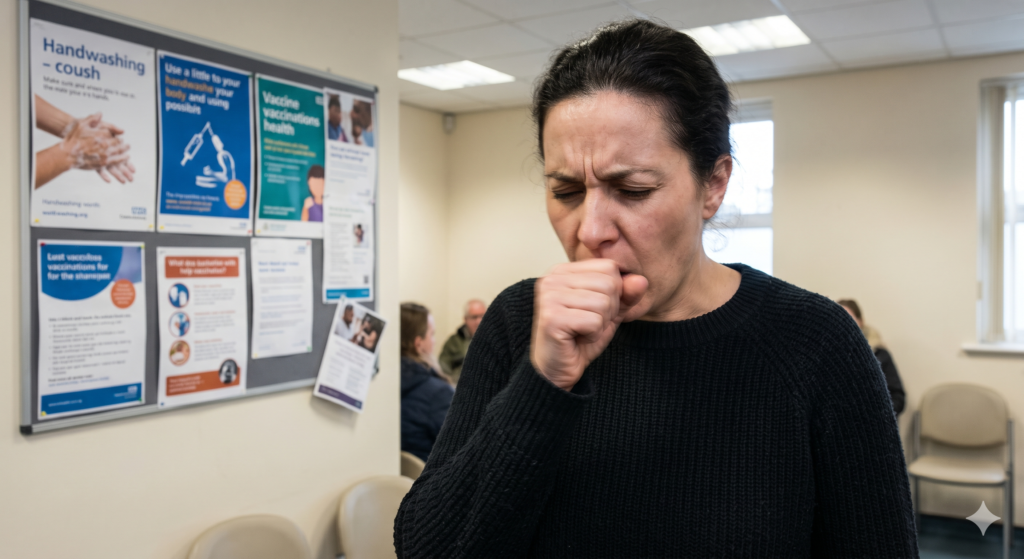
Dry, persistent Cough
Usually dry and hacking,
sometimes becoming productive. In 2026, flu-related bronchitis has
been more commonly
reported, causing
wheezing.
Headache
Intense frontal or whole head pain is common,
often linked to the fever
and sinus pressure. Can
be one of the first signs to
appear.
Sore Throat &
Congestion
Less prominent than in
colds but still present,
particularly with
Influenza B, which is
currently surging across
the United States.
Some people — particularly children — also experience
vomiting, nausea, and diarrhea with the flu. While these
symptoms are less common in adults, they are not unheard of,
especially with certain strains circulating this season.
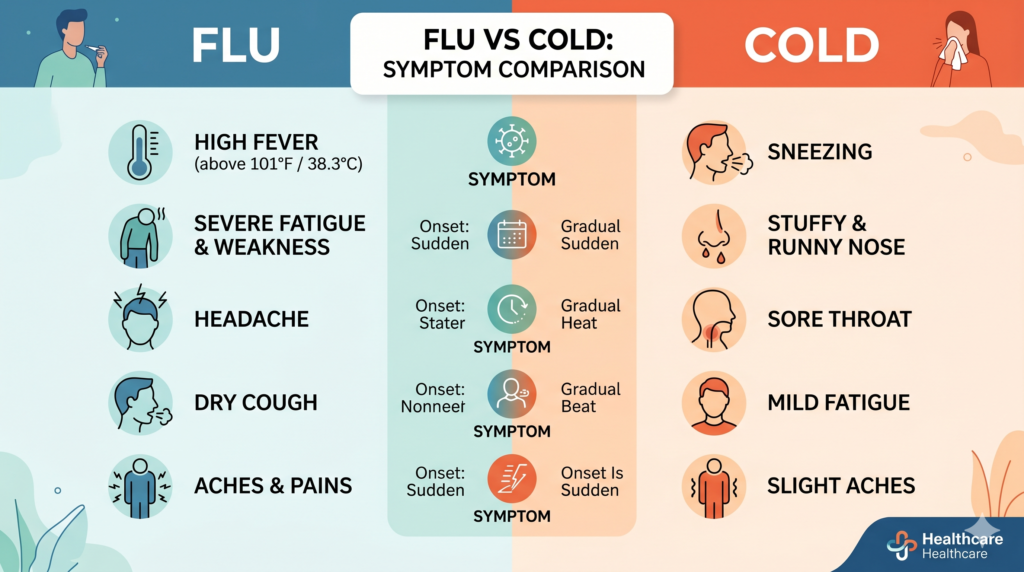
Flu vs. Cold: How to Tell the Difference
One of the most-searched flu questions is “how do I know if I
have the flu or just a cold?” The differences are meaningful,
and knowing them can help you decide how urgently to seek
treatment.
| Symptom | Flu | Common cold |
| Onset | Sudden (hours) | Gradual (days) |
| Fever | Common, high (100– 104°F) | Rare or mild |
| Body aches | severe | Mild or absent |
| Fatigue | Intense, can last weeks | Mild |
| Headache | Common, intense | Uncommon |
| Runny nose/ stuffy nose | Mild | Prominent |
| Sneezing | Uncommon | Very common |
| Complications | Pneumonia, hospitalisation | Rarely serious |
The rule of thumb? If it knocked you flat before you even
realised you were sick, it’s probably the flu. A cold rarely
makes you cancel your entire week.
How Long Does the Flu Last?
For most healthy adults, the acute phase of influenza lasts
about 5 to 7 days, with fever typically resolving in the first
three to five days. However, the fatigue and cough can linger
for two weeks or longer. Children and older adults often
experience a longer recovery period.
In 2026, the H3N2 and Influenza B strains have been
associated with a slightly extended period of respiratory symptoms — particularly a persistent cough — compared to previous seasons. Don’t be surprised if it takes a full two
weeks to feel entirely back to normal.
What About Flu Symptoms in 2026? Is
This Year Different?
Yes — and significantly so. The 2025–2026 flu season has been
one of the most severe in decades. The dominant strain, H3N2
subclade K, caused a poor match with earlier vaccine
formulations, meaning more breakthrough infections than
usual. A surge of Influenza B (specifically the B/Victoria
lineage) arrived later in the season, extending its duration
well into spring.

H3N2 infections in particular are causing high fevers, severe
chills, and profound body aches — more intense than many
people expect. Influenza B tends to cause slightly milder
illness overall, but sore throat, headache, and nasal
congestion are more pronounced with it. Both strains have
been linked to secondary complications, including sinusitis,
bronchitis, and pneumonia, particularly in vulnerable groups.
When Is the Flu Contagious?
This is another top-searched question — and for good reason.
You become contagious about one day before your symptoms even begin, and remain contagious for up to five to seven days after symptoms start. Children and people with weakened
immune systems can spread the virus for even longer.

This means the flu spreads before you know you have it —
which is why hygiene practices like frequent hand washing,
covering coughs, and staying home when sick are so critical to
slowing transmission.

- Seek Emergency Care If You Experience:
- Difficulty breathing or shortness of breath
- Persistent chest pain or pressure
- Confusion, dizziness, or altered mental state
- Severe or persistent vomiting preventing fluids
- Fever above 103°F lasting more than 3 days
- Symptoms that improve then return with worse fever
- Blue or grey colouring of lips or face
How to Treat Flu Symptoms at Home
Most people with the flu recover at home without needing
prescription treatment. The following evidence-based steps
can significantly ease symptoms and speed recovery:
Rest completely. Your immune system needs energy. Cancel your
plans, stay in bed, and give your body the resources it needs to fight the virus.

Stay hydrated. Fever causes fluid loss. Water, clear broths, herbal
teas, and electrolyte drinks help prevent dehydration, which
worsens symptoms.
Use fever reducers wisely. Acetaminophen (paracetamol) or
ibuprofen can reduce fever and relieve muscle aches. Follow dosage
instructions carefully and never give aspirin to children.

Consider antiviral medication. Oseltamivir (Tamiflu) and other
antivirals are most effective when taken within 48 hours of symptom
onset. They can shorten illness duration by 1–2 days and reduce the
risk of complications.
Humidify and soothe. A cool-mist humidifier eases respiratory
symptoms. Honey in warm tea can soothe a sore throat. Saline nasal
sprays reduce congestion.
Isolate yourself. Stay home for at least 24 hours after your fever
breaks without fever-reducing medication to prevent spreading the
virus to others.
Prevention: The Best Flu Remedy Is Not
Getting It
The single most effective way to prevent the flu is annual
vaccination. The 2026 flu vaccine has been updated to target the dominant strains, including H3N2 and Influenza B.
Even in seasons with a vaccine mismatch, getting vaccinated
significantly reduces the risk of serious illness,
hospitalisation, and death.

High-risk groups — including adults over 65, pregnant women,
young children, and those with chronic health conditions —
should speak with a healthcare provider about additional
protective measures and the right vaccination formulation for them.
“The flu shot still reduces your risk of severe illness, even in
a tough season. Protection is imperfect — not getting
vaccinated is worse.
If you are experiencing flu symptoms right now, remember:
rest is medicine, hydration is medicine, and time is medicine.

Most people recover fully. But pay attention to the warning
signs above, and don’t hesitate to contact a healthcare
professional if something feels wrong. You know your body- trust that instinct.
· FOR INFORMATIONAL PURPOSES ONLY
· ALWAYS CONSULT A QUALIFIED HEALTHCARE PROFESSIONAL
